June 2025 Newsletter


Research News


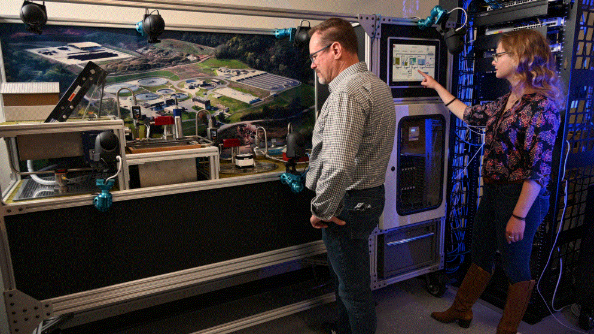
FICS, INL, and the State of Florida Launch the Locks and Levees Platform


Image credit: Idaho National Lab website
FICS Research has joined forces with the Idaho National Laboratory (INL) and the State of Florida to develop the Locks and Levees Platform—a state-of-the-art cybersecurity training and simulation environment Center of Excellence focused on protecting the state’s critical water management systems. This innovative platform is designed to equip cybersecurity professionals with hands-on experience defending industrial control systems that oversee flood control, water distribution, and environmental protection. “The Center of Excellence will set a new standard for cybersecurity in water management systems and serve as a model for other states,” said Pedro Allende, Secretary of the Florida Department of Management Services. For more information and the full press release, click here.


Rampazzi and Team Expose Microphone Vulnerability

Image credit: UF news website
Sara Rampazzi, PhD, and her research team—including doctoral student Sri Hrushikesh Varma Bhupathiraju—have uncovered a critical security and privacy flaw in modern microphone design. These microphones, common in everyday devices, emit unintended radio signals as interference when processing audio. The researchers demonstrated that eavesdropping is possible using only an FM radio receiver and a copper antenna—no device tampering required. “With an FM radio receiver and a copper antenna, you can eavesdrop on these microphones. That’s how easy this can be,” said Rampazzi. Using machine learning tools from OpenAI and Microsoft, the team further demonstrated how intercepted signals could be cleaned and transcribed, making it easier for bad actors to search conversations by keyword (Read More).

FICS Faculty Receive Promotion and Tenure for Research and Teaching Accomplishments

We are proud to recognize the following FICS faculty members for their recent accomplishments:

·     Mark Tehranipoor, PhD, has been promoted to Distinguished Professor.

·     Vincent Bindschaedler, PhD, and FICS Associate Director Farimah Farahmandi, PhD, have been promoted to Associate Professor with Tenure.

·     Catia Silva, PhD, promoted to Instructional Associate Professor

·     Patrick Traynor, PhD, will begin serving as the Interim Chair of the CISE Department, effective July 1st.

Please join us in congratulating these outstanding faculty members on their well-deserved achievements!

HOST 2026 Submission Deadline Approaching

Are you ready to showcase your research and connect with global leaders in hardware-oriented security? Submit your abstract by August 19, 2025, to be considered for this leading conference on hardware security. HOST welcomes high-quality submissions on topics such as Hardware Security, CAD for Hardware Security Verification, Hardware Attacks, as well as Defense and System Security. The HOST conference will take place in Washington, DC, from May 4 to May 7, 2026. Reach out to Program Chair Prabhat Mishra, or visit the official website for submission guidelines and event details.

Student Updates

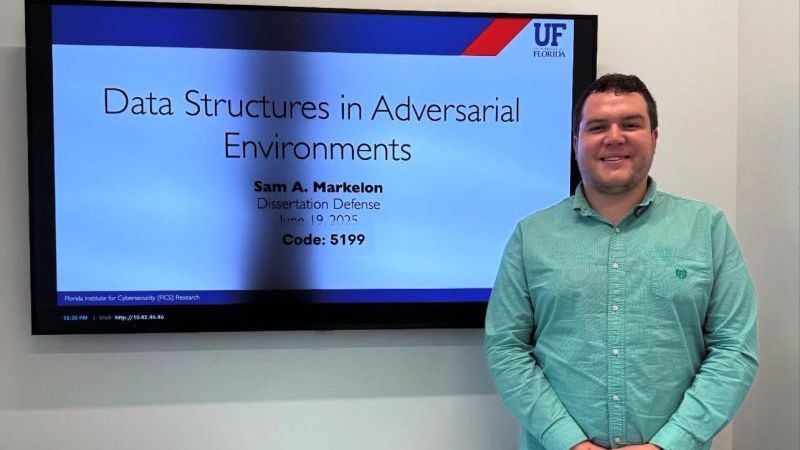
Congratulations Dr. Sam A. Markelon!

Image credit: Sam A. Markelon, Ph.D.
We are proud to announce that Sam A. Markelon has successfully defended his dissertation and completed his PhD in Computer Science at the University of Florida! Markelon’s research contributions, dedication, and perseverance have been outstanding, and his work marks a significant milestone in the field of cryptography and privacy. We are very excited to share that Markelon has accepted a position at Proof Trading as a quantitative researcher. Please join us in congratulating him and thanking his committee members for their guidance and mentorship, including committee chair Vincent Bindschaedler, PhD, Sara Rampazzi, PhD, Jeremy Booher, PhD, and Patrick Traynor, PhD.

Intern Spotlight

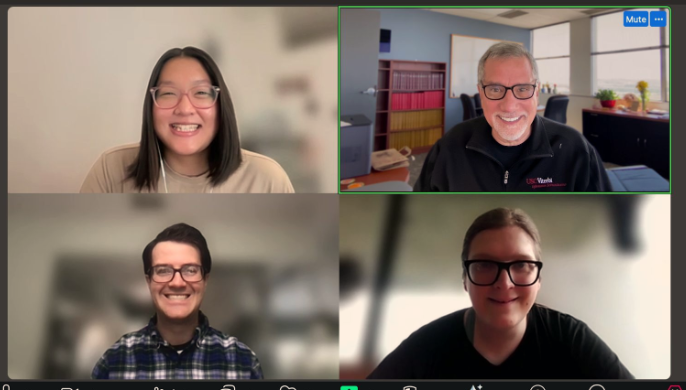
Allison Lu and Daniel Olszewski are spending their summer as Virtual Interns at the University of Southern California’s SPHERE, a national research testbed funded by the National Science Foundation, where they are working on an exciting initiative to port Representative Experimentation Environments (REEs). REEs are open-source artifacts derived from published cybersecurity and privacy research. These tools are designed to reproduce original research results and have demonstrated significant reuse across the research community. By integrating REEs into SPHERE’s infrastructure, Lu and Olszewski are helping ensure greater reproducibility, broader accessibility, and long-term research impact. This work directly supports SPHERE’s mission to foster open, transparent, and repeatable experimentation in cybersecurity—a critical step in strengthening scientific integrity and innovation in the field. (Read More).